
Buying your first home is already a lot to figure out. Down payment, credit score, mortgage rates – the list feels never-ending. But there is one cost that is catching a lot of first-time buyers off guard in Jacksonville right now, and it is homeowners insurance.
Florida has one of the most challenging insurance markets in the entire country. Rates have gone up dramatically over the last few years, and Jacksonville buyers are feeling it. If you are getting ready to buy your first home, understanding how insurance fits into your budget is not optional – it is essential. Skipping this step can completely derail an otherwise solid purchase.
Here is what you need to know before you make an offer.
Why Is Homeowners Insurance So Expensive in Florida Right Now?
Florida has always had higher-than-average insurance costs because of hurricane risk, but what has happened recently goes beyond seasonal storms. Several major insurance companies have either left the Florida market entirely or significantly reduced the policies they are willing to write. When fewer companies are competing for your business, prices go up.
The factors driving costs higher include increased claims from storm damage, rising construction costs that make repairs more expensive, roof claim fraud that caused industry-wide losses, and reinsurance costs that insurance companies pass directly to homeowners.
Jacksonville is not the hardest-hit area in Florida – South Florida and the Gulf Coast face even steeper rates – but Northeast Florida buyers are absolutely seeing the impact. A home that might have insured for $1,500 a year five years ago could easily run $3,000 to $5,000 or more today depending on the age, condition, and location of the property.
That is not a small number, and for a first-time buyer already stretching their budget, it matters.
How Insurance Costs Change What You Can Actually Afford
Here is the thing most first-time buyers do not realize until it is too late: your monthly mortgage payment is not just principal and interest. It also includes your property taxes and homeowners insurance, all wrapped together into what is called PITI – principal, interest, taxes, and insurance.
Your lender calculates your debt-to-income ratio based on that full number. So if insurance costs come in higher than expected, it can actually push you over the qualifying threshold for the loan you were counting on, or force you to lower your purchase price to stay within budget.
Say you are buying a $275,000 home and budgeted $150 a month for insurance. Your lender ran the numbers based on that estimate. Then you get an actual quote and insurance comes back at $350 a month. That is $200 more per month in your PITI, which could be the difference between qualifying comfortably and not qualifying at all – or having to drop your price target significantly to make the math work.
This is why I always tell buyers to get insurance quotes early in the process, not the week before closing.
The Roof Factor: Why Older Roofs Are a Big Deal in Jacksonville
One of the biggest insurance variables in Jacksonville right now is the age of the roof. Insurance companies in Florida are increasingly reluctant to insure homes with roofs that are more than 15 to 20 years old. Some carriers will not write a policy at all on a roof over a certain age. Others will insure it but only at a much higher premium, or only for the actual cash value of the roof rather than full replacement cost.
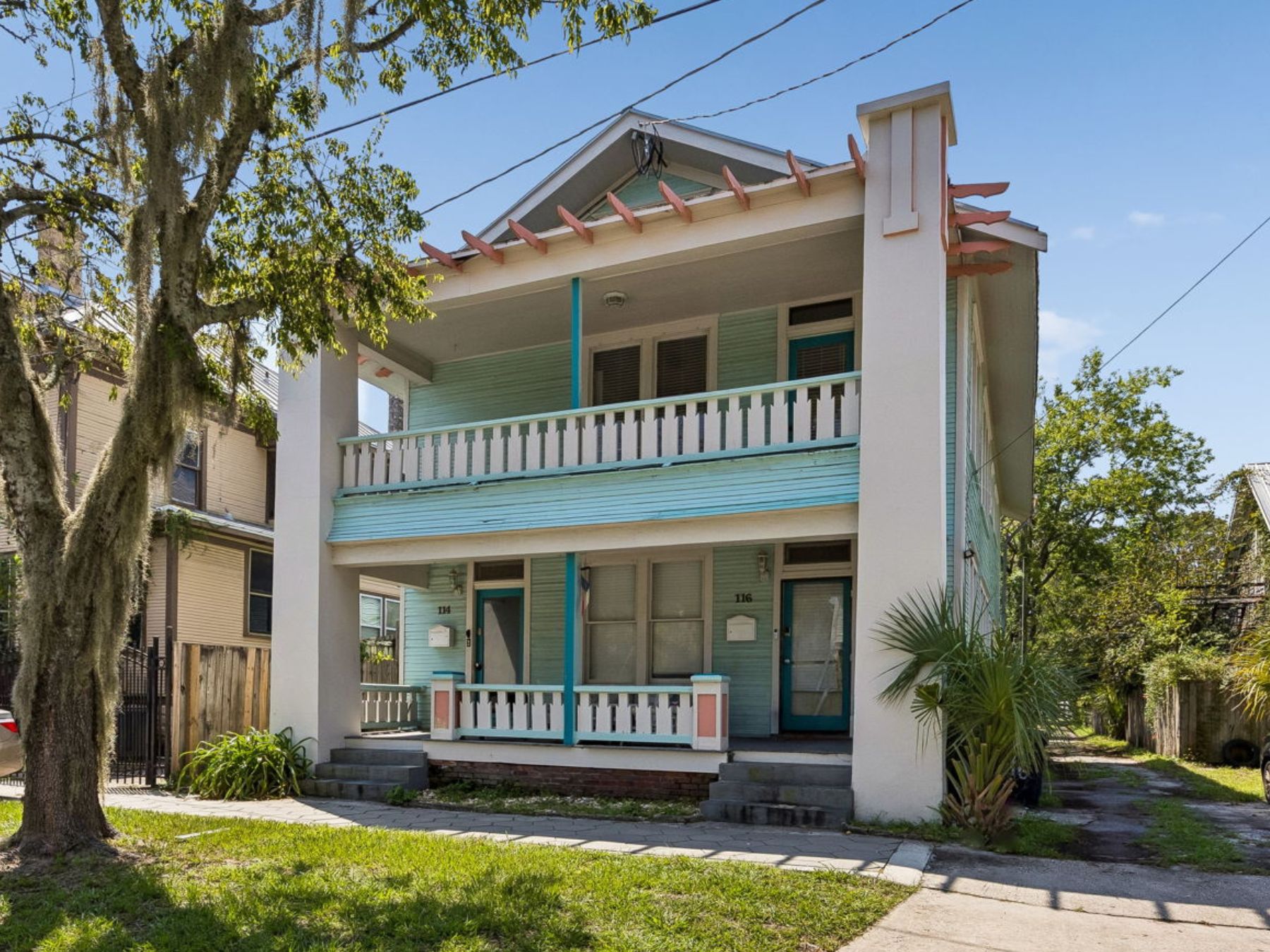
Why does this matter for you as a first-time buyer? Because Jacksonville has a lot of older housing stock, especially in the neighborhoods that tend to appeal to first-time buyers – areas like Springfield, Riverside, Murray Hill, and Arlington. Many of these homes are charming and well-priced, but they may also have roofs that are approaching or past that threshold.
Before you fall in love with a house, find out when the roof was last replaced. It is a question worth asking upfront, not during inspection. If a roof is old, you need to factor in the cost of either replacing it soon or paying significantly higher insurance rates.
Some sellers will negotiate a roof replacement or a price reduction to account for it. But you need to know this before you are emotionally attached to the home.
Flood Insurance: Do Not Forget This One
Homeowners insurance does not cover flood damage. In Florida, that is not a technicality – it is a significant gap in coverage that can cost you everything.
If the home you are buying is in a FEMA-designated flood zone, your lender will require you to purchase a separate flood insurance policy. But here is what catches people off guard: even homes outside of the high-risk flood zones can flood in Jacksonville. The city has known drainage challenges, and certain neighborhoods have seen flooding from heavy rain events that had nothing to do with hurricanes.
Flood insurance through the National Flood Insurance Program (NFIP) can run anywhere from a few hundred dollars to several thousand dollars per year depending on the property’s elevation and flood zone classification. Private flood insurance options also exist and are sometimes more affordable.
When you are looking at homes, look up the flood zone status. A home right outside of a required flood zone might still be worth insuring voluntarily – especially if it is in a low-lying area. This is something I walk my buyers through before they make an offer, because surprises at closing are not fun.
What First-Time Buyers Can Do to Manage Insurance Costs
The good news is you are not completely powerless here. There are smart moves you can make during the home search and buying process that can help you manage this cost.
Get an insurance quote before going under contract. Most agents will do a preliminary quote based on the address once you are seriously interested in a property. This gives you real numbers to plug into your budget before you are locked in.
Ask about the four-point inspection. Florida insurance companies typically require a four-point inspection on older homes. This inspection covers the roof, electrical system, plumbing, and HVAC. Knowing the condition of all four before you buy protects you from getting hit with an uninsurable property or a policy that excludes coverage for a problematic system.
Work with a local independent insurance agent. An independent agent can shop your policy across multiple carriers to find the best rate. This is especially important in Florida right now where not all carriers are writing policies in all areas.
Consider newer construction. New builds often qualify for lower insurance rates because of modern building codes, new roofs, and updated systems. If you are open to newer construction in your price range, the insurance savings can be meaningful.
Negotiate with the seller. If insurance costs are high because of a specific issue – old roof, outdated electrical, old HVAC – use that as leverage in your negotiation. A price reduction or seller credit to address the problem is a reasonable ask.
How This Fits Into the Bigger Picture of Buying in Jacksonville
Rising insurance costs are not a reason to stop looking at homes. Jacksonville is still one of the more affordable major metros in Florida. Property values are strong, there are good neighborhoods at a variety of price points, and there is real opportunity here for first-time buyers who go in with a clear plan.
But the days of treating insurance as a minor line item are over. It is now a meaningful part of your monthly payment, and it needs to be part of your strategy from the start – not something you think about two days before closing.
The buyers who struggle are the ones who get pre-approved, fall in love with a house, and only then discover that the insurance is $500 a month and the whole deal falls apart. The buyers who succeed are the ones who build insurance into their search criteria from day one, ask the right questions early, and work with a team that includes both a knowledgeable agent and a good local lender.
That is the difference between a smooth process and a frustrating one.
If you are a first-time buyer trying to figure out how to approach the Jacksonville market right now, the best thing you can do is start with a real conversation – one that covers your full monthly payment, not just the purchase price. That is exactly the kind of guidance I provide through my CLEAR PATH™ process, so you can make a confident decision without guessing.
Frequently Asked Questions
How much does homeowners insurance cost in Jacksonville, Florida for a first-time buyer?
It varies depending on the home, but buyers should realistically budget $200 to $500 per month for homeowners insurance, sometimes more on older homes or larger properties. Getting a quote specific to the home you are interested in is the most accurate way to plan.
Does homeowners insurance affect my mortgage approval?
Yes. Your lender includes insurance costs in your monthly PITI payment when calculating your debt-to-income ratio. If insurance comes in higher than estimated, it can affect how much home you qualify to buy.
Do I need flood insurance if I am buying a home in Jacksonville?
If the home is in a FEMA high-risk flood zone, your lender will require it. Even outside required zones, flood insurance is worth considering given Jacksonville’s drainage challenges and history of localized flooding from heavy rain.
Why do insurance companies care about my roof?
Florida insurance carriers are very focused on roof age because roof damage is the most common and costly claim in the state. Roofs older than 15 to 20 years may face higher premiums, limited coverage options, or difficulty getting insured at all.
When should I get an insurance quote during the home buying process?
Before you go under contract, not after. Getting a preliminary quote while you are seriously considering a home gives you real numbers for your budget and can prevent costly surprises at closing. Your real estate agent and lender should both encourage this step.